The Living Blue: Morocco’s Indigo Dyeing Tradition
Explore Morocco’s sacred indigo dye tradition—where green leaves become vibrant blue through ancient fermentation, preserved by artisans for generations.
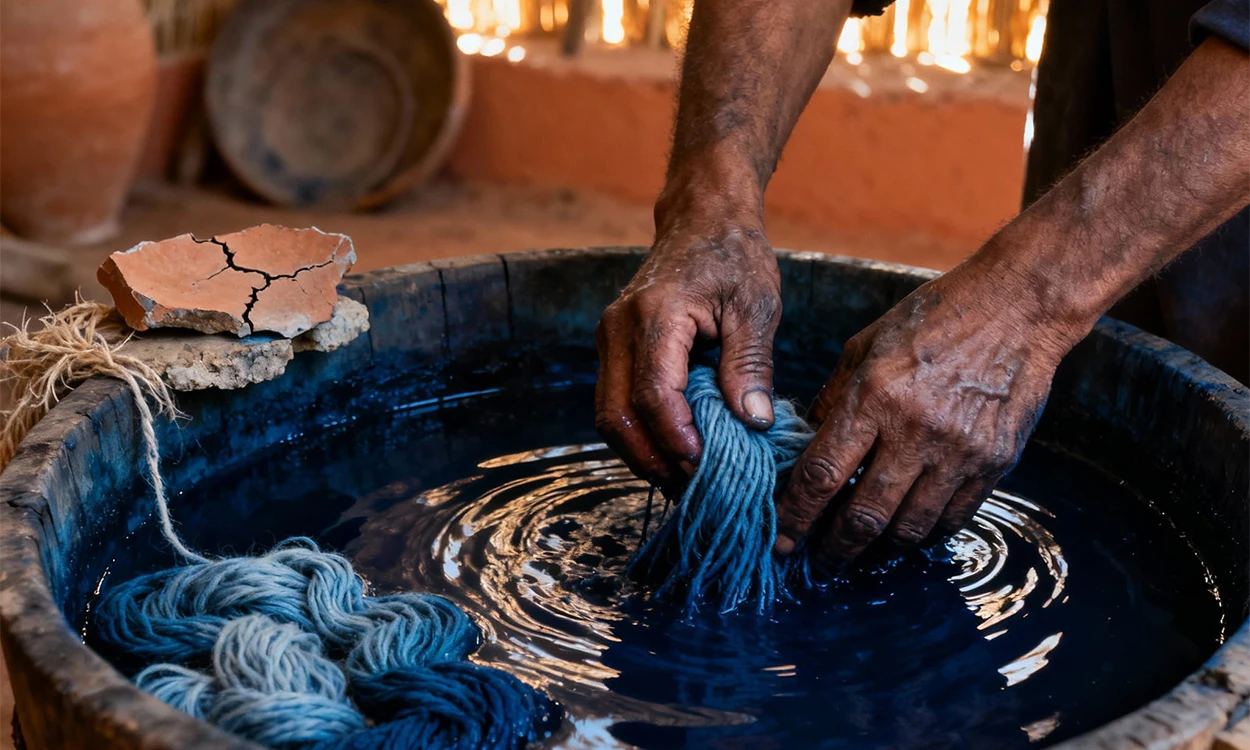
How does a green plant create the most magical blue color in the world? Of all the natural dyes used in Moroccan textiles, none is surrounded by more mystery and reverence than indigo. The transformation of the indigo plant into the rich blues that appear in traditional Berber textiles involves a complex living process that connects science, art, and spiritual practice in a remarkable cultural tradition.
Unlike other natural dyes that release their color relatively easily, indigo requires an alchemical transformation—a living fermentation process that converts the colorless compounds in the plant into the vibrant blue we associate with traditional Moroccan textiles.
The Sacred Science of Indigo
The indigo plant (Indigofera tinctoria) contains no blue pigment in its natural state. Instead, it contains precursor compounds called indican. The magical transformation happens when these compounds are broken down through fermentation and then exposed to oxygen, creating true indigo blue.
In traditional Moroccan dyeworks, especially in areas like the Middle Atlas Mountains, you'll find special sunken vats dedicated solely to indigo dyeing. These vats are maintained for decades, with new materials periodically added to replenish the living bacterial culture within.
Master dyers can determine the health of an indigo vat simply by its smell and the appearance of the characteristic coppery sheen on its surface—a metallic bloom that indicates the fermentation is proceeding correctly. This knowledge represents generations of careful observation and accumulated wisdom.
The Living Vat: A Cultural Heritage
Traditional indigo vats in Morocco are truly alive—containing active bacterial cultures that facilitate the chemical transformation of indican into indigo. These vats are often maintained continuously for generations, with specific families becoming known as keepers of particularly effective "blue wells."
The preparation of a new indigo vat follows precise steps developed over centuries:
Base Preparation: Creating an alkaline environment using wood ash lye
Starter Culture: Often including ingredients like dates, honey, or madder root to feed the bacteria
Fermentation Period: Allowing time for bacterial action to develop
Maintenance: Regular feeding and testing of the vat's condition
These vats develop their own character over time, with older vats often producing more complex, nuanced blues. In some Moroccan dyeing traditions, portions of established vats are used to start new ones, creating a direct lineage of living cultures connecting modern artisans to their ancestors.
The Dyeing Process: Between Science and Magic
The process of dyeing with indigo differs fundamentally from other natural dyes, creating a sense of magic that has contributed to its cultural significance:
The Paradox of Color
When wool or fabric is first immersed in a properly prepared indigo vat, it emerges a pale yellowish-green—not blue at all. Only as the material is exposed to air does the blue color develop before your eyes, darkening with each passing minute.
This transformation happens because the indigo compounds must be in a reduced state (without oxygen) to bond with the fiber. Once attached to the fiber, exposure to oxygen converts them to their blue form. This visible transformation from yellow-green to blue has contributed to indigo's spiritual associations in many cultures.
Building the Blue
Creating deep indigo blues requires patience and precision. The fabric must be dipped repeatedly, with oxidation periods between each immersion:
The material is carefully immersed in the vat and gently manipulated to ensure even coverage
After several minutes, it is removed without introducing excessive oxygen to the vat
The yellowish material is exposed to air, turning increasingly blue as it oxidizes
Once fully oxidized, the process is repeated to build deeper color
For the deepest blues found in traditional Moroccan textiles, this process might be repeated 15-20 times, often over several days. Each immersion adds more depth to the color, creating the remarkably rich blues characteristic of fine Berber textiles from the Atlas Mountains region.
Cultural and Spiritual Dimensions
Throughout Morocco, indigo blue carries profound cultural significance beyond its visual beauty:
Protection and Blessing
In traditional Berber culture, indigo blue is believed to offer spiritual protection. Garments dyed with indigo were thought to guard against the evil eye and harmful influences. This protective quality extends to textiles used in the home, with indigo-dyed rugs and fabrics believed to bless and protect the spaces they occupy.
Ritual Practices
The dyeing process itself is often accompanied by rituals that reflect its transformative nature. In many traditional dyeworks, specific prayers or songs accompany the preparation of indigo vats. The first immersion of new material might be timed to coincide with favorable lunar phases or religious observances.
Certain taboos surround the indigo vat—such as restrictions on menstruating women approaching the vats. Modern science offers an explanation: the delicate pH balance of the fermentation can indeed be disrupted by small chemical changes. What appeared as spiritual practice also encoded practical knowledge for consistent results.
Regional Blues: Variations Across Morocco
Different regions across Morocco have developed distinctive indigo traditions:
Fez Blue: The imperial city of Fez developed a sophisticated indigo tradition producing a distinctive deep blue with subtle purple undertones, historically associated with urban elite textiles.
Tafilalet Blue: In this southern oasis region, indigo was often combined with mineral-rich water to create blues with a distinctive greenish cast, seen in traditional oasis textiles.
High Atlas Blue: Mountain communities developed techniques for creating incredibly durable indigo dyes capable of withstanding harsh alpine conditions, often with a slightly more muted quality.
These regional variations reflect adaptations to local water chemistry, available materials, and cultural preferences—creating distinctive blue identities across Morocco's diverse textile traditions.
A Living Heritage Under Threat
Traditional indigo dyeing faces significant challenges in the modern era. Synthetic indigo, introduced in the late 19th century, now dominates global markets. The knowledge of maintaining living indigo vats is typically passed down through family lineages rather than formal education.
When an elder dyer passes away without transmitting their knowledge, centuries of refined understanding can disappear. Several organizations throughout Morocco are working to document these techniques and create formal apprenticeship programs to ensure this remarkable living tradition continues.
By supporting textiles created using traditional indigo methods, we help preserve not just beautiful blues but a living cultural practice that connects us to centuries of human ingenuity and deep understanding of working with nature's materials.