The Alchemy of Mordants: How Moroccan Artisans
Discover the ancient chemistry behind Morocco’s vibrant textiles. Learn how artisans use alum, iron, copper, and plant tannins to bind natural dyes, creating colors that endure for generations.
What's the secret to creating vibrant, lasting colors in traditional Moroccan textiles? While the plants, insects, and minerals provide the color sources, it's the science of mordants—materials that help bind dye molecules to fiber—that transforms fleeting color into permanent beauty. This ancient chemical knowledge represents one of the most sophisticated aspects of traditional Moroccan textile arts.
The word "mordant" comes from the Latin "mordere," meaning "to bite," as these materials help the color "bite" into the wool. Without proper mordanting, even the most beautiful natural dyes would quickly fade or wash away. This crucial step transforms temporary stains into permanent, living color.
The Science Behind Traditional Mordants
Moroccan dyers have refined the use of mordants over centuries, developing sophisticated understanding of how different materials interact with both fibers and dye compounds. While the language they use might not match modern chemistry, their practical knowledge demonstrates remarkable scientific insight.
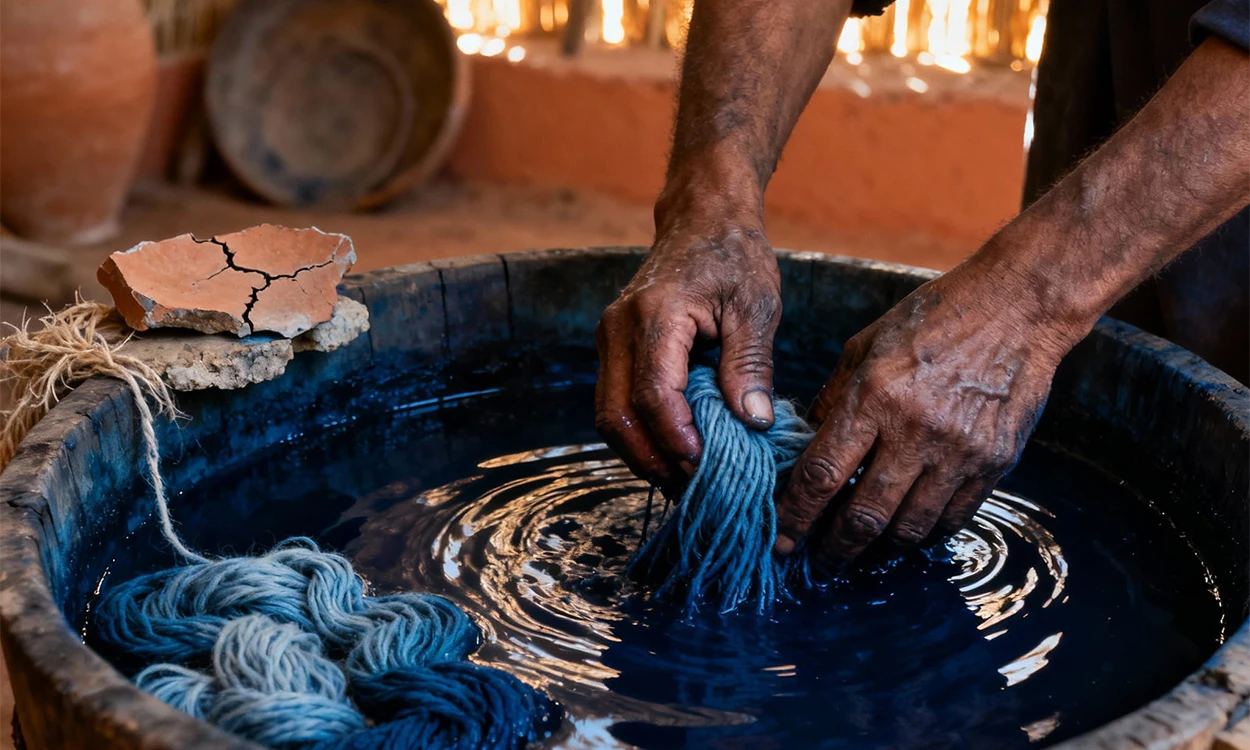
Traditional mordanting begins with thorough preparation of the fiber. Moroccan artisans understand that wool must be properly cleaned to remove natural oils and impurities that might interfere with even dye absorption. This cleaning process typically involves washing in mountain streams or collected rainwater, often using natural soap made from the saponaria root.
The Four Key Mordants of Moroccan Dyeing
1. Alum (Potassium Aluminum Sulfate)
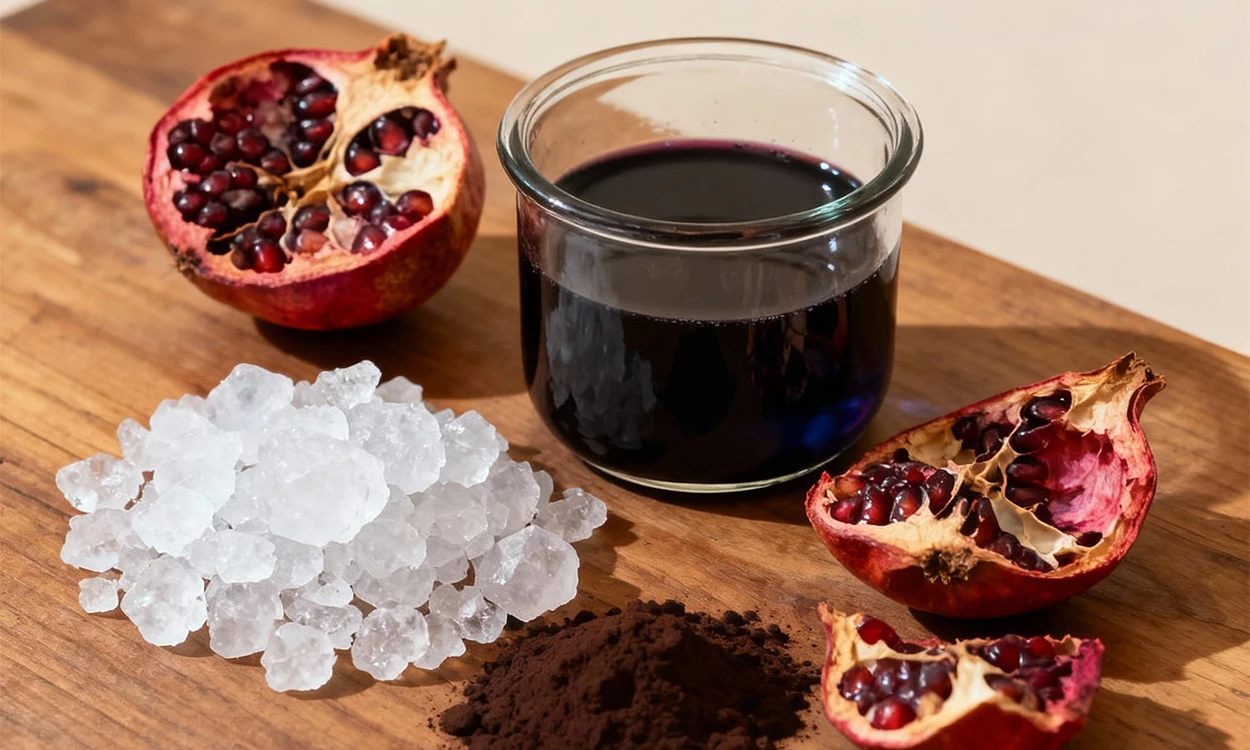
The most common mordant in the Moroccan tradition, alum is extracted from mineral-rich clay deposits found throughout the country. It creates a strong bond between dye and fiber while maintaining or brightening the natural color of the dyestuff.
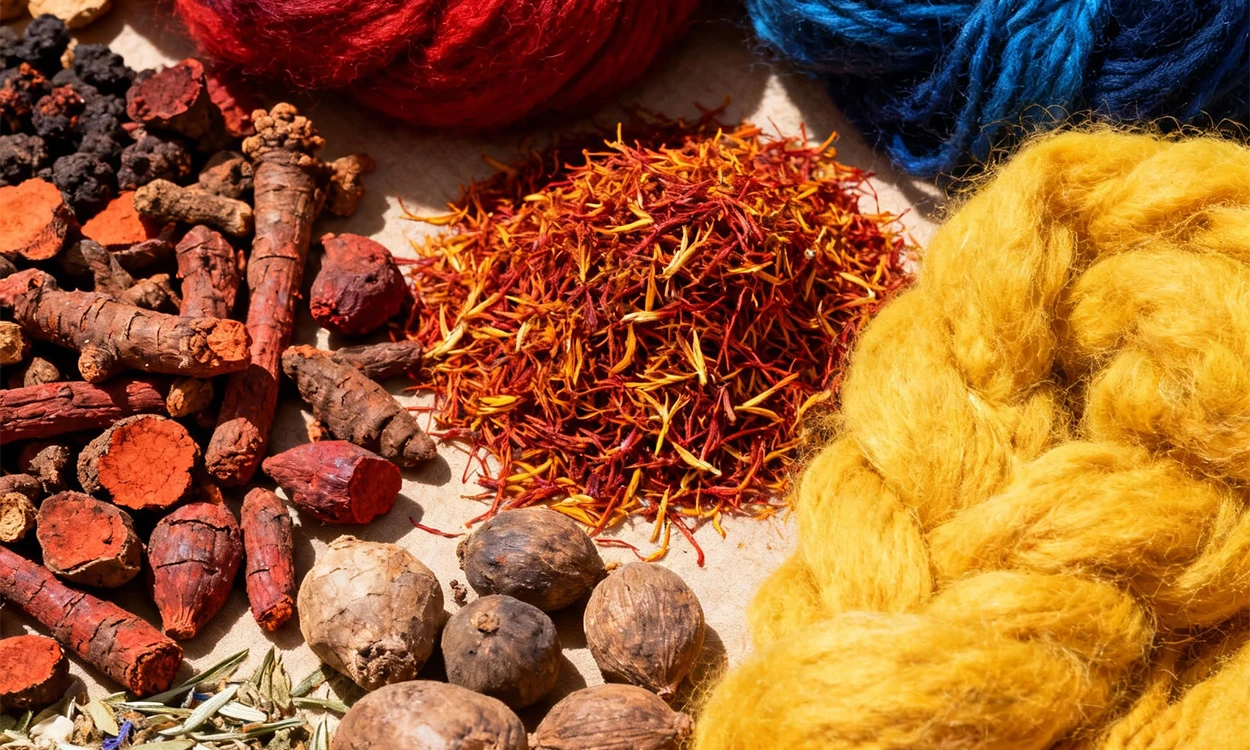
When used with madder root, alum produces clear, vibrant reds. With yellow dye plants like pomegranate or chamomile, it yields bright, clear yellows. Its versatility makes it the foundation of traditional color creation across the Atlas Mountains region.
Application methods vary by region. In some areas, fiber is pre-mordanted in an alum bath before dyeing. In others, the alum is added directly to the dye bath. The most sophisticated techniques involve both pre-mordanting and adding additional alum during the dyeing process for maximum color saturation.
2. Iron (Ferrous Sulfate)
Traditional dyers create iron mordant by soaking old iron—nails, horseshoes, or tools—in vinegar for extended periods, creating ferrous sulfate through a natural chemical reaction. This mordant dramatically changes or "saddens" colors, creating deeper, more somber tones.
Iron mordant transforms madder's bright red into deep burgundy or even brown. Yellow dyes become olive green, and blue dyes deepen to near-black. This color-shifting property makes iron an important tool for expanding the color palette available from limited dye sources.
Because iron can weaken natural fibers, traditional artisans use it judiciously, often in lower concentrations or as an after-treatment rather than a primary mordant.
3. Copper
Derived from copper vessels or scraps, this mordant shifts colors toward green tones. When used with yellow dyes, it creates vibrant greens without the need for indigo overdyeing—a valuable technique in regions where indigo might be scarce or expensive.
Copper mordant is used selectively in traditional Moroccan dyeing due to its specific effects and stronger impact on fibers. It's often applied as a post-mordant, where dyed fibers are briefly treated in a copper solution to shift the final color.
4. Tannins
Tannin-rich materials like pomegranate rinds, oak galls, or sumac leaves serve as both dye sources and mordants. Their high tannin content helps bind other colors to the fiber while adding warmth and depth.
In traditional sequences, wool might first be treated with tannin-rich materials before applying other mordants, creating a foundation that enhances color fastness. This layered approach demonstrates the sophisticated understanding of chemical interactions in traditional practice.
The Mordant Magic: Creating Color Variations
The combination of dye material and mordant creates an extraordinary range of possibilities from limited resources. For example, madder root can produce colors ranging from soft coral pink with alum to deep burgundy with iron.
Master dyers create their signature colors through precise combinations:
Sequential Mordanting: Applying different mordants in specific sequences
Mixed Mordants: Combining alum with smaller amounts of iron or copper
Post-Mordanting: Treating dyed fibers with additional mordants to shift color
These techniques allow artisans to create dozens of distinct colors from just a handful of dye sources—an important adaptation to working within the constraints of locally available materials in the Atlas Mountains region.
Regional Variations in Mordanting Techniques
Different regions across Morocco have developed distinctive mordanting traditions based on locally available materials:
High Atlas Communities: Rich in mineral deposits, these areas often use sophisticated alum techniques with multiple mordanting stages.
Middle Atlas Region: Known for excellent iron mordant preparation, creating the characteristic deep browns and burgundies seen in traditional textiles from this area.
Southern Oasis Communities: Limited access to mineral mordants led to greater reliance on plant-based tannins and innovative mordanting sequences.
These regional variations contribute to the distinctive color palettes associated with textiles from different areas, even when using similar dye materials.
Traditional Wisdom Meets Modern Understanding
The mordanting techniques developed over centuries align remarkably well with modern chemistry. What traditional artisans discovered through careful observation and generational knowledge—the optimal pH levels for different mordants, the impact of water quality, the ideal temperature ranges—has been validated by contemporary scientific understanding.
This traditional knowledge represents a sophisticated form of applied chemistry developed without modern scientific equipment or theory—a testament to human ingenuity and careful observation over generations.
By supporting textiles created using these traditional methods, we help preserve not just beautiful objects but living knowledge systems that connect us to centuries of human innovation and deep understanding of natural materials.